
What is it?
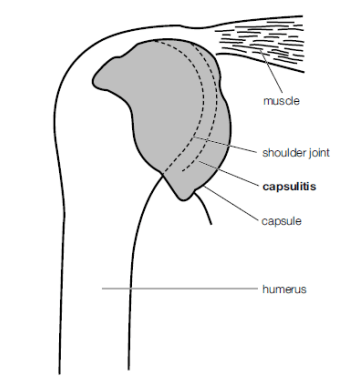
A frozen shoulder (also known as adhesive capsulitis) is when inflammation develops within the shoulder joint and adhesions form in the capsule of the shoulder. The capsule thickens overtime due to the adhesions. Bands of scar tissue form and this causes pain and limits the range of motion of the shoulder.
In some cases, it is so severe that the shoulder cannot be moved, hence the term “frozen”.
Who does it affect?
It can affect any person of any age but is more common in middle-aged women and young athletes. It is also commonly encountered in people with diabetes, heart and thyroid problems.
What is the cause?
Anything causing an inflammatory process within the shoulder or abnormal tone in the shoulder musculature can lead to a subacromial bursitis and/or adhesive capsulitis.
What are the symptoms?
The main symptoms are pain and stiffness in the shoulder, which are slight at first and then progressively get worse. The problem can be classified into four distinct stages:
- Niggling. Pain, especially at night, but free movement.
- Freezing. Continuing pain at rest, gradual loss of movement.
- Frozen. Worse pain both day and night. Pain on movement at end of range and with sudden movement.
- Thawing. Gradual return of movement with less pain.
The pain is a deep and throbbing ache felt in the shoulder with possible radiation down the arms and possibly into the neck. It is aggravated by everyday movements such as hanging clothes, combing the hair, and getting dressed and undressed. Whilst ultrasounds are commonly utilised to check for a frozen shoulder, calcium may be seen within the shoulder capsule on x-ray.
How can chiropractic help?
Spinal adjustments are delivered by chiropractors to restore misaligned vertebras to their correct position, restore normal disc mechanics and reduce nerve irritation. Chiropractors also assess and adjust extremity joints such as the shoulder. Shoulder adjustments and mobilisations can help reduce the pain, improve the shoulders range of motion and speed of recovery. The treatment depends on the symptoms that are present, how progressed the condition is, and how long the patient has had the condition. Chiropractic management mainly aims to address the cause of inflammation around the shoulder with additional focus on improving range of motion.
 Kit Chiropractic