
What is a bunion?
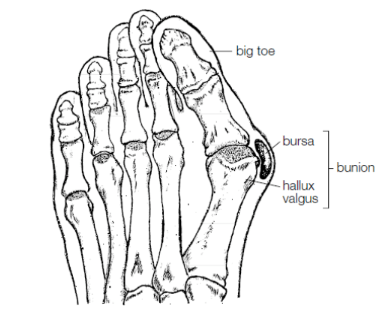
A bunion is an inflamed bursa overlying the V-shaped bony prominence on the outside edge of the joint at the base of the hallux (big toe). It is a very common condition. They are 3 times more common in women.
What is the cause?
–Ankle/knee injury in the past: an ankle/knee that is not functioning properly may cause excess pronation and stress on the hallux.
–Sacroiliac joint misalignments: a foot may have to compensate for a misaligned pelvis/sacrum. Overtime, this compensation causes problems in the foot, especially the hallux.
–Badly fitting footwear: usually narrow, pointed-toed, high-heeled shoes that compress the toes together.
–Family history (Less common)
What are the symptoms?
The bony protrusion (proximal hallux) of the bent hallux is pushed out beyond normal and forms a hump that we call a bunion. The bunion rubs inside of your footwear, causing the overlying skin to become rough and thickened into a callus.
What are the complications?
The constant pressure, especially from a tight shoe on the callus, can cause fluid to develop into a small sac, which is called a bursa. The affected joint is more likely to develop osteoarthritis due to the abnormal angulation.
How can chiropractic help?
Chiropractors assess the spine and extremities such as the elbows, ankles and even the joints of the foot. Foot joints generally shift out of their normal alignment during an ankle inversion sprain (most common ankle sprain). By realigning the joints of the foot and ankle to their correct positions, it will help reduce the inflammation at the hallux and re-establish good proprioception (awareness of joint position) which is important for good rehabilitation. In the meantime, spinal adjustments where required are also delivered to remove any further nerve signal interference to the foot and help increase the speed of recovery.
Talk to your Gonstead Chiropractor today
Murtagh, J. (2012). John Murtagh’s patient education. Sydney: McGraw-Hill Australia.
 Kit Chiropractic